Asphalt or Concrete for a Georgia Driveway
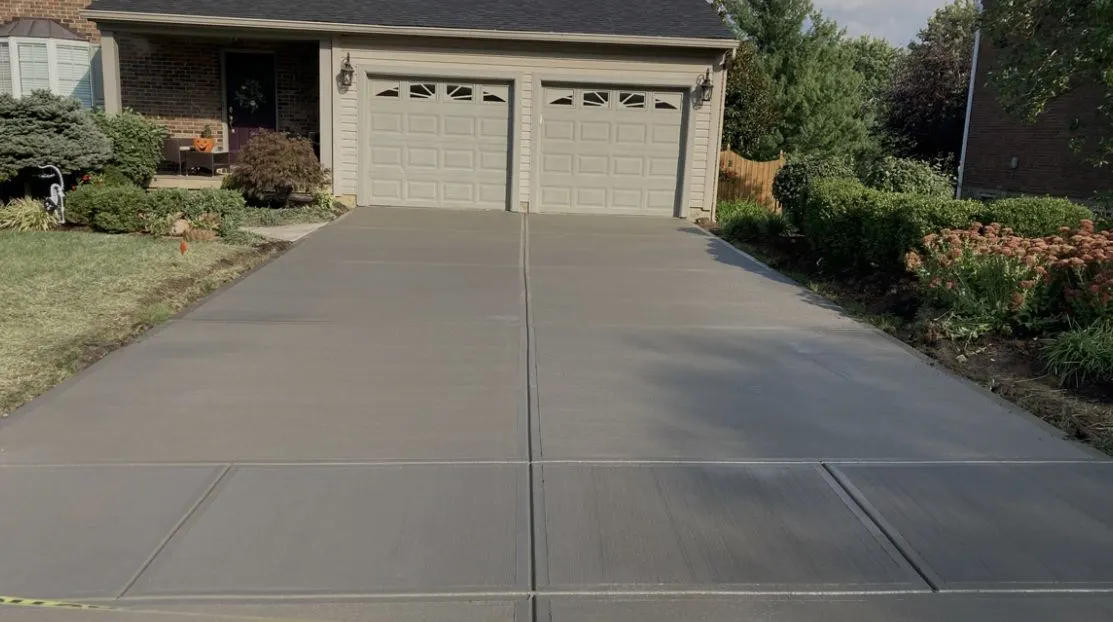
For a Georgia driveway, asphalt usually costs less up front and is simpler to patch, while concrete is a rigid slab that asks for less routine surfacing work but is harder to repair invisibly. Neither one wins on every lot. The right pick depends on how you use the drive, how water moves across it, and how much upkeep you are willing to schedule. Here is how the two compare for homeowners in Griffin, Fayetteville, Atlanta and the surrounding area.
How asphalt and concrete differ
Asphalt is gravel (called aggregate) held together by a black petroleum binder. It stays slightly flexible, so it can move a little with the ground underneath. Concrete is cement, sand and stone that sets into a hard slab. It is relatively rigid, and crews cut or tool joints into it to help control where it cracks.
You see the difference right away. Asphalt is dark and usually continuous, with typically fewer visible joints. Concrete is lighter and broken into panels by joints, and it can be finished smooth, broomed for traction, or stamped and colored. If curb appeal and a specific look matter to you, that may settle it. If not, upkeep and site conditions should carry more weight.
Your existing driveway matters too. A drive with a sound, well-drained base can often take a new surface of either type. A drive with a soft or failing base needs that fixed first, whatever goes on top.
| Factor | Asphalt | Concrete |
|---|---|---|
| Surface | Dark, flexible, typically fewer visible joints | Light, rigid, with visible joints |
| Routine upkeep | Periodic sealcoating, crack filling | Joint care, sealing if desired, crack monitoring |
| Typical repair | Patching, crack filling, resurfacing | Crack repair, slab replacement in worse cases |
| Appearance options | Usually black | Broom, smooth, stamped or colored finishes |
| Up-front cost | Often lower | Often higher |
Upkeep and repairs to consider
Asphalt
Asphalt asks for attention on a schedule. Driveway sealcoating adds a protective coat over the surface to slow oxidation and help reduce water and oil penetration. Crews often wait several months after paving before the first coat, then reapply every few years depending on traffic and sun exposure. Cracks should be cleaned and filled early, because open cracks let water reach the base.
When asphalt does wear out, repair is forgiving. Failed spots can be cut out and patched, and a worn but sound drive can often be resurfaced. Patches may differ in color from the surrounding surface, but driveway access may be restricted during repairs.
Concrete
Concrete needs less surface treatment, but it is not maintenance free. Appropriate joint care can help limit water infiltration beneath the slab. Hairline cracks are common and often only cosmetic. Wider cracks, or panels that sit at different heights, may indicate a base or drainage problem worth looking at.
Repairing concrete is less flexible. Small cracks can be sealed, but a badly cracked or settled panel usually means cutting it out and pouring a new one, and the new section rarely matches the color of the old. Anyone quoting repairs should explain which approach they expect and why, and should not promise a particular lifespan.
How Georgia weather affects the decision
Georgia summers usually bring heat, humidity and heavy rain, and thunderstorms are common from June through August. Heat can soften asphalt at the surface, which is one reason a proper mix can matter. Heavy rain can affect both surfaces: if water has nowhere to go, it works into the base and weakens it from below.
Winters in parts of Georgia can dip below freezing, usually from December to February. Water that gets into a crack can freeze, expand and widen it. That makes crack care important for asphalt and joint care important for concrete. Ask how the planned surface and its joints or edges are built to handle that cycle.
Your lot can also change the picture. A driveway in Griffin, one in Fayetteville and one in Atlanta share a broad climate, but each can differ in shade, slope and runoff. Full shade keeps a surface damp longer. A drive that slopes toward the garage or meets the street at a dip may collect water. If your yard has clay soil, drainage and base preparation deserve extra scrutiny. We cover paving work in Griffin, Fayetteville and Atlanta, and the questions about water are the same in each.
Choose for the site and confirm the scope
Start with how the drive is used. A family with several cars, a trailer or a boat parked on it puts more load on the surface than a single car does. Then look at what you have now: its condition, where it pools water, and whether the base underneath is solid. Finally, decide how much the look matters against the upkeep you will take on.
If you lean toward asphalt, see our page on driveway paving. If concrete suits your site and style better, our concrete driveways page explains that work. Before you sign anything, ask each crew the same questions:
- What base preparation is included, and how deep will excavation go if the base is weak?
- What surface thickness is planned, and why for your traffic?
- For concrete, where will joints go, and how will edges be finished?
- For asphalt, how are edges supported, and when should the first sealcoat happen?
- How will water be directed off and away from the drive?
Walk the driveway after a hard rain and note where water collects. Tell the crew what you found, because that spot often decides how the work should be done.
Family-owned Apex Paving offers driveway paving and concrete driveways. Ask for a Free Quote.
Common questions
Which is better for a driveway, asphalt or concrete?
Neither is better everywhere. Asphalt tends to suit owners who want lower up-front cost and easy patching, and concrete suits owners who want a lighter, more finish-friendly surface and less routine surfacing work. Drainage and base condition also matter.
Does an asphalt driveway need more maintenance than concrete?
Usually it needs more scheduled work, mainly periodic sealcoating and crack filling. Concrete needs less surface treatment but still needs attention to joints and cracks.
Can I put a new asphalt or concrete surface over my old driveway?
Sometimes, if the base underneath is sound and drains well. A crew should inspect the drive first, since a failing base will undermine any new surface placed on top.
Areas we serve
Our services
Have a question about your project? Call (470) 497-9955